A bulk backpack order takes one decision and copies it across hundreds of units, which means a small spec miss does not stay small. The pack that looked fine in a photo shows its shortcuts three weeks after the boxes arrive, when a zipper strips on the fourth day of a conference or a fresh embroidery job puckers on a glossy panel. None of these are exotic failures. They are the same handful of mistakes, and every one of them is avoidable at the spec stage. Here is where custom backpack orders go wrong and how to write the order so they do not.
Mistake one: buying by price and guessing at capacity
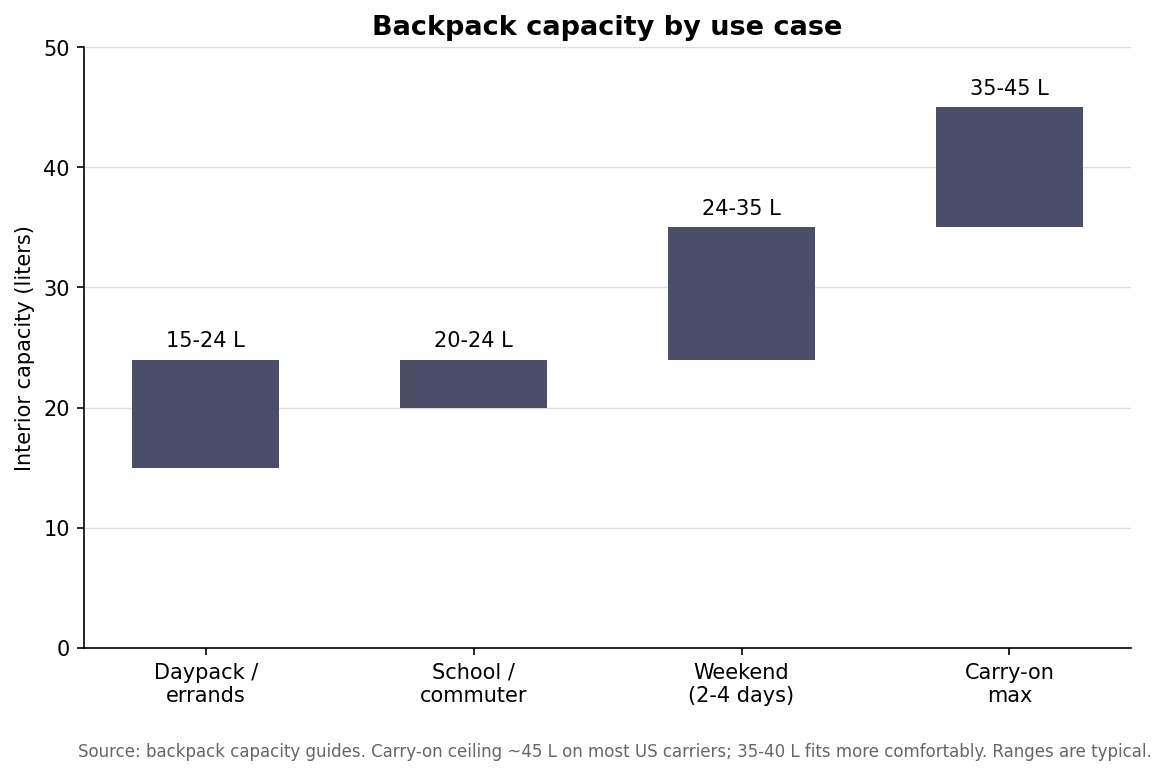
Capacity is measured in liters of interior volume, and it is the number people most often get wrong. A pack that is too small gets abandoned; one that is too big is dead weight for a daily carry. As a rough map, 15 to 24 liters covers a daypack for errands and single nights, 20 to 24 liters is the everyday commuter range that swallows a padded 13-, 15-, or 16-inch laptop plus a charger and lunch, 24 to 35 liters handles a two-to-four-day trip, and most US airlines treat roughly 45 liters as the ceiling for a carry-on, with 35 to 40 fitting more comfortably across carriers. Liters describe usable interior space far more reliably than exterior height and width, so compare recipients’ actual needs against the liter figure, not the silhouette in the catalog.
Mistake two: treating the zippers as an afterthought
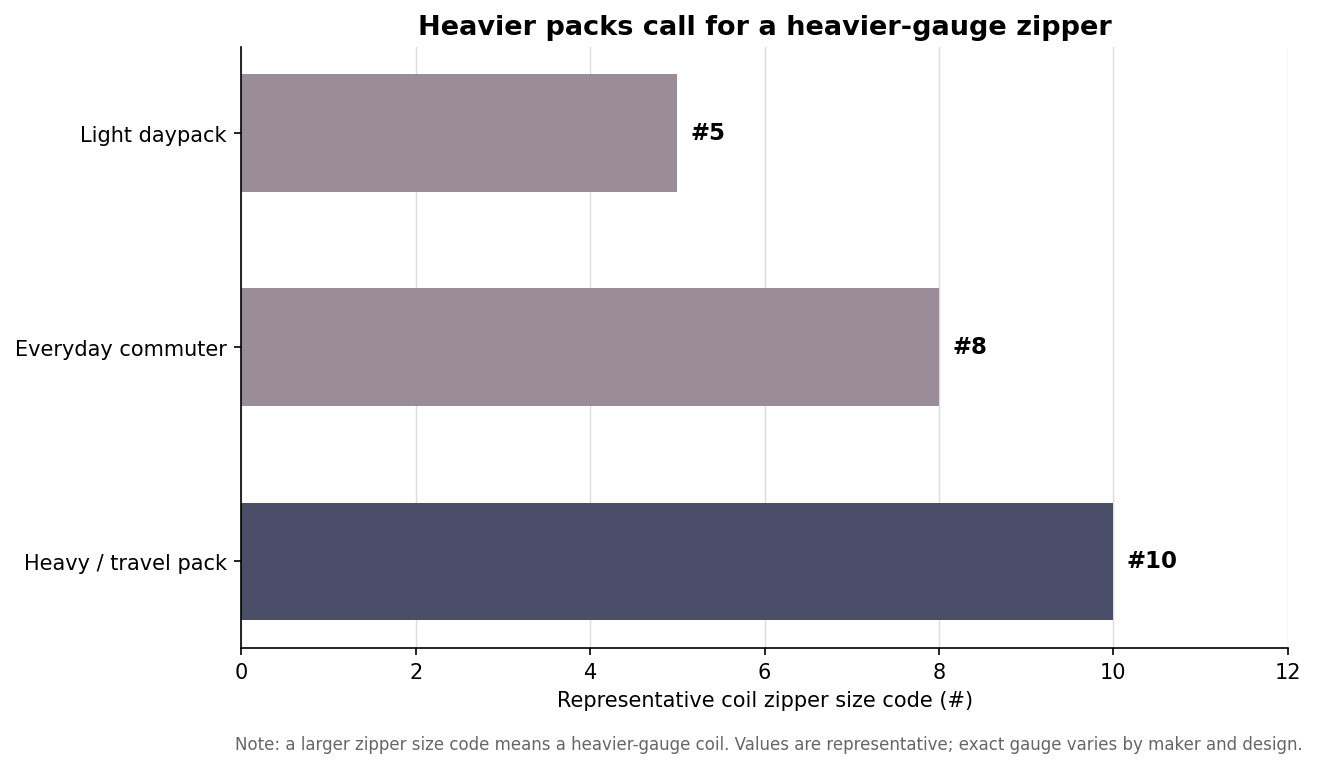
Ask anyone who repairs bags where they fail first and the answer is the zipper. It is also the easiest place to cut cost, which is why budget packs quietly swap in unbranded hardware. Specify the zipper the way you would specify the fabric. YKK is the industry benchmark for smooth, durable sliders; generic coils wear out faster and jam under daily use. Coil zippers are light and flexible for everyday bags, reverse-coil hides the teeth and sheds light rain and dust better, and molded plastic (Vislon) teeth take abrasion for outdoor use. Heavier packs also call for a heavier-gauge coil — a larger size code — so match the hardware to the load rather than accepting whatever the blank ships with. If the pack will see weather, a PU-coated or water-resistant zipper on the main compartment is worth the small upcharge.
Mistake three: choosing a decoration the fabric cannot hold
The decoration method has to suit the panel it lands on. Dense embroidery stitched directly into a thin, high-denier coated nylon tends to pucker and can perforate the water-resistant coating, which is exactly the failure you do not want on a pack sold as weatherproof. On technical fabrics, an embroidered or woven patch sewn or heat-sealed to a reinforced base panel gives the branded look without stitching through the shell, while screen printing and heat transfer sit flat on smoother polyester faces. Placement matters too: a logo centered over a foam-backed panel presses cleanly, whereas one straddling a seam or a zipper garage distorts the moment the pack is loaded. Decide the fabric and the decoration together, not in separate conversations. It also helps to size the artwork to the method: fine text and gradients survive better in a woven patch or a printed transfer than in thread, while a bold single-color mark embroiders cleanly and reads well from across a room. When in doubt, ask the decorator to stitch or print your exact logo on a scrap of the actual pack fabric before committing the run.
Mistake four: ignoring the parts that touch the body
Because a giveaway pack is judged the first time someone actually wears it loaded, the carry system deserves as much attention as the outside. Look at the straps, the back panel, and the laptop protection. Shoulder straps want padding and a bit of contour plus bar-tack stitching at the anchor points, since a straight line of stitches at a stress point is a tear waiting to happen. A back panel with some foam and channels keeps the pack off a sweaty spine, and a sternum strap steadies a heavier load. If the pack advertises a laptop sleeve, confirm it is genuinely padded and sized to the device — a slot of unpadded fabric labeled a laptop sleeve protects nothing. These are cheap to specify and expensive to retrofit once a run is made. Handle and grab-loop stitching deserve a glance too, since those get yanked constantly and are another spot where a reinforced bar-tack separates a pack that lasts a year from one that lasts a season.
Mistake five: skipping the sample and the lead-time math
The last mistake is procedural. Approve a physical pre-production sample before the full run, and build the calendar backward from when you need the packs. A digital proof shows the logo but not how the embroidery actually sits on the shell, how the zippers glide, or whether the strap padding is what you pictured; a sewn sample answers all three. On timing, custom bags carry a longer lead time than flat goods because of the construction and, for overseas production, transit — plan on about 2 weeks from mockup approval at Get Custom Backpacks and confirm dates in writing. Order a small buffer over your headcount for damages and latecomers. Get the sample right and the lead time honest, and the order that arrives is the one you actually specified.